
Service Guide — Chiropractic Care
Chiropractic Care in Baxter & Brainerd, MN
Hands-on adjustments to get your spine — and the rest of you — moving right.
Manual adjustments to realign the spine, relieve chronic neck and back pain, and restore normal joint motion.
01 — The Basics
What chiropractic adjustment actually does
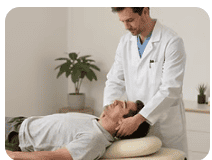
When a spinal joint loses its normal motion — from an old or new injury, poor posture, or just day-to-day wear — the muscles around it tighten to compensate, and that’s often where the pain shows up. A chiropractic adjustment is a controlled, precise force applied to a restricted joint to restore its normal movement, which can reduce pain, improve mobility, and remove irritation from the nerves.
02 — What To Expect
What an initial visit looks like
History & exam
We start by understanding your symptoms, how they started, and what makes them better or worse and a health history followed by a hands-on assessment of your posture, spinal motion, and areas of restriction.
The adjustment
Using hands or a specialized instrument, we apply a quick, targeted force to restore motion at the restricted joint — most patients feel immediate loosening. Techniques used are diversified, activator, Thompon and flexion/distraction.
A plan, not a guess
Depending on what we find, we’ll build a plan that may combine adjustments with physical therapy, massage, acupuncture, or decompression rather than adjustments alone. Depending on what we find, imaging (x-ray or MRI) may be needed. Once again, treatment is tailored to you and your condition
03 — Who It Helps
Who chiropractic care helps
- Chronic or recurring neck and back pain
- Stiffness and reduced range of motion
- Tension headaches linked to neck restriction
- Postural strain from desk work or driving
- Recovery support after an injury
- Disc injuries
See our conditions page for other conditions we treat.
04 — Safety & Fit
Is it safe for me?
Chiropractic adjustment is a well-studied, conservative treatment appropriate for most people, including many older adults and, with modified techniques, children and pregnant patients. We screen for red-flag conditions before any hands-on care, and we’ll always refer out if something is outside the scope of conservative treatment.
Questions We Often Hear
Most patients feel pressure or a quick release rather than pain. Any soreness afterward is usually mild and similar to post-exercise soreness.
It depends on how long you’ve had symptoms and how your body responds — we’ll give you a realistic estimate after your first exam, not a standard package. We base our treatment plans off of clinical research, our education and clinical experience.
No. Every patient is different which can require different techniques that do not involve a caviation/”pop”. We take patient tolerance into account when
deciding and performing adjustments. With whatever technique used, to goal is to restore proper motion into the joint we are working on.
Ready When You Are
Ready To Feel Better
Our team is here to help you move better, feel better, and live healthier